Polar Training in Norway
Pole to Pole involves things I've never done — polar travel and ocean rowing chief among them. So in March I went to Norway for my first polar training. Here's how two weeks on the ice went.
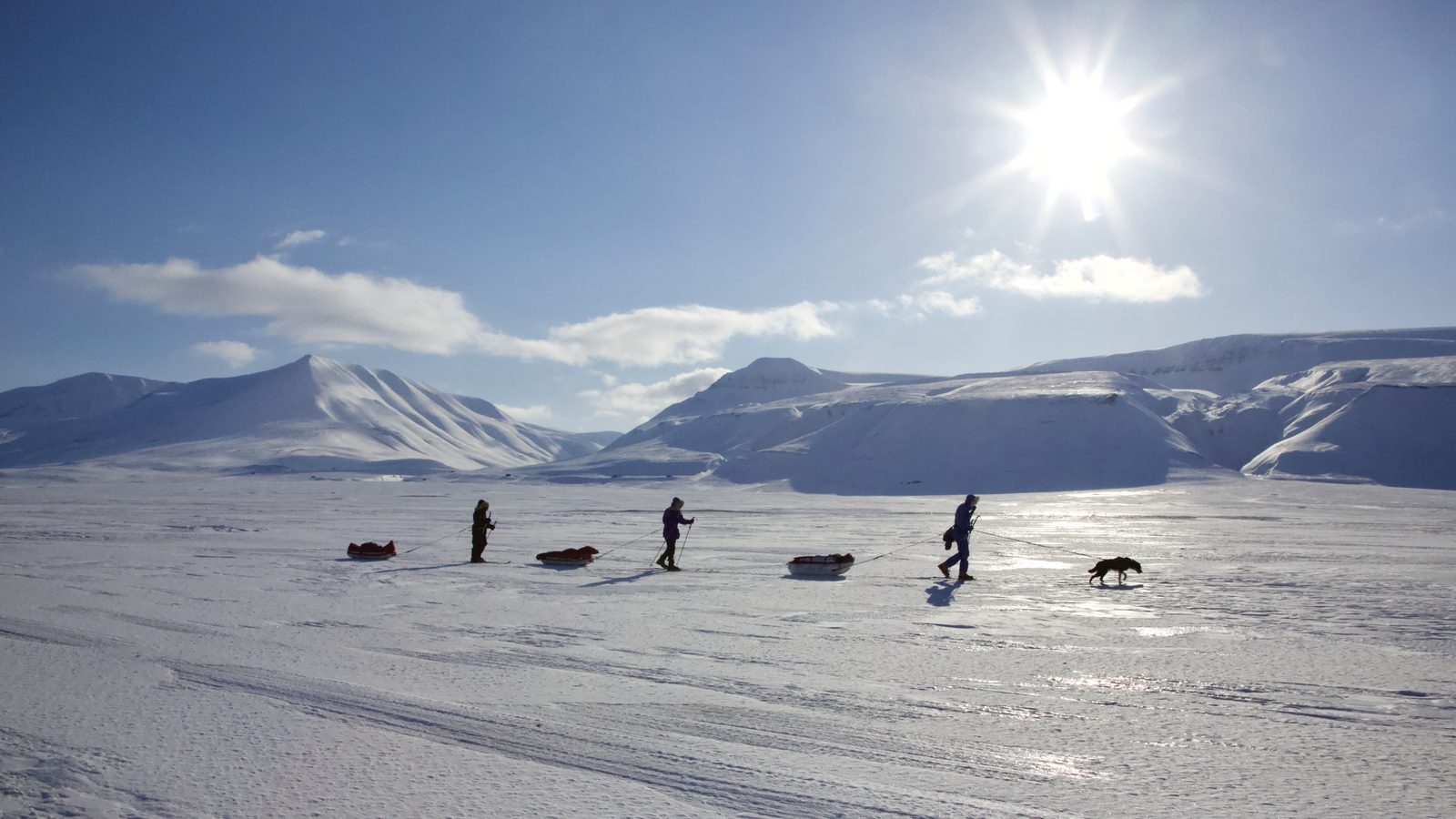 Hardangervidda · NorwayReaching the end of the mini-expedition
Pole to Pole is going to involve activities I’ve never done before — specifically polar travel and ocean rowing — which means extensive training is required. In March I headed to Norway to begin the polar side of it. I came in apprehensive, unsure how physically hard it would be. In preparation I’d been dragging a tyre (aka Wilson) up and down Maroubra Beach, but had no real idea if it would be enough. I’d also had a hip replacement less than six months earlier, which only added to the doubts.
After flying into Oslo, it was a scenic four-and-a-half-hour train ride to Finse, where the training was based. Coming from a 30-degree Sydney summer to sub-zero temperatures was a shock to the system. I was met by the incredible Hannah McKeand of Polar Expedition Training, who was leading us. Joining me were my fellow trainees, Noah and Lucy — a small group, as three others had unfortunately pulled out.
Week one
The first week was all about what’s actually involved in a polar expedition — clothing, camping, navigation, nutrition, risk management and a great deal more. It was full on: theory from 8am, putting it into practice in the afternoon, more theory before dinner, then a related movie or webinar after. We finished with a couple of days preparing and packing for week two — a mini-expedition to put everything into practice.
As we got ready to set off, I was still a little nervous. What would it be like pulling a 40 kg pulk? Would the tyre-dragging be adequate? How would the body hold up? And then there were all the practicalities — the camping, the food, and dealing with the cold.
Week two
There was nothing to worry about. For one, we were in the very best hands. Hannah is a Guinness World Record holder with over twenty years in the polar world — through her own expeditions, guiding others, and managing the camps in Antarctica.
Generally we were up at 6:30am — breakfast, pack up, and underway by 8:30. We’d do one-hour marches followed by a 15-minute break, repeated five or six more times. Each march we’d take turns leading, practising navigation and learning the best way to read a path through the terrain. Then we’d make camp — tents up, dinner on, before sliding into our sleeping bags very ready to sleep.
Before heading out we set ourselves a few success factors. The first was that we stayed safe. The second was that we had fun — and we did. I haven’t laughed so much in a long time. For me that’s an important part of adventuring: it can be full on, physically demanding and uncomfortable in plenty of ways, and laughter is a wonderful antidote to all of it.
After seven days we’d covered 108 km, eaten a lot of snacks (a vital and very enjoyable part of polar expeditions), seen some spectacular scenery and built real confidence. It was an incredible experience — challenging, and a good reality check on what’s involved. My preference is to do the South Pole section with one or two others rather than joining a guided trip, so next I’ll need a 21-day unguided expedition — most likely next February.
Arctic plans
One slightly disappointing thing was learning that skiing from the North Pole looks unlikely. There haven’t been any North Pole expeditions since 2018, for a range of reasons, and I’d hoped that might change — but sadly not. So the option I’m looking at now is joining a ship that heads toward the North Pole in summer, gets close, and then sets out onto the ice to reach the actual Pole. The rest of the expedition stays exactly the same, and it only cuts out around 111 km of skiing — so in the big scheme of things, not a huge deal. There’s still plenty of physical challenge left.
Reflection
Norway was a big step on the road to the start line, and as I said, one I approached with a lot of apprehension — particularly around the physical demands. Polar expeditions are a different beast from anything I’ve done: the Nile, cycling across Australia, bikepacking through Oman. This was new territory, and I wasn’t sure my preparation would be enough. In the lead-up I kept swinging between backing myself based on everything I’ve already done and quietly fearing it would be an overreach. The good news is that yes, it stretched me — but it was within my capabilities.
Following a big dream is always going to be uncomfortable. The discomfort is the whole point. If it felt easy, it wouldn’t be much of a dream.
That’s what the dream movement is about: moving forward toward the things that excite and scare us, even when the fear and doubt are still there — getting familiar with discomfort so it stops having a veto over our decisions.
Next steps
One is finishing the after-action review — a full reflection on the training and mini-expedition, to carry the learnings forward. The primary focus now is getting a professional website built and then approaching potential sponsors… along with a whole lot of actions on the project plan.
Follow the road to the start line.
Training reports, planning notes and — before long — dispatches from the expedition itself.No spam — just the journey as it unfolds.
UPDATES MONTHLY AT MOST